Straw Marquetry
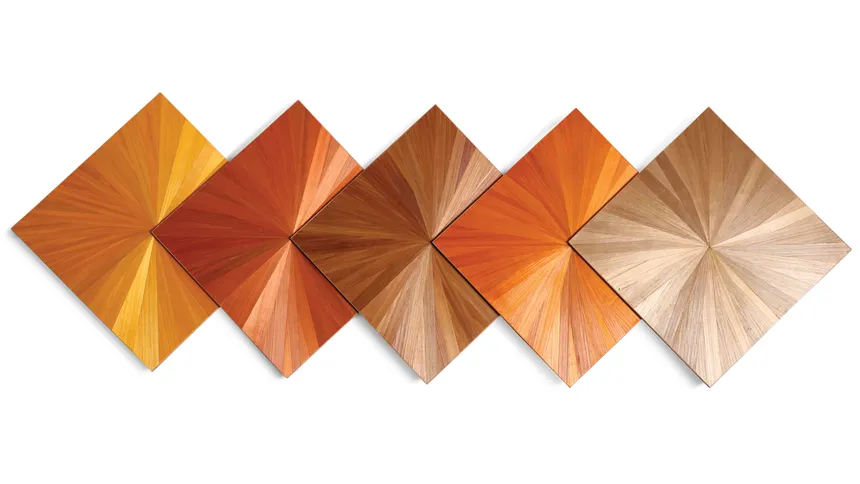
Straw marquetry is one of the most luxurious and distinctive decorative techniques in furniture making. Like traditional wood marquetry, thin pieces are carefully cut and arranged to create intricate patterns — but instead of wood veneer, the medium is rye straw.
The result is unlike anything else: a shimmering, iridescent surface that catches and reflects light with every movement, transforming as you walk past it.
The Material
The straw used in this craft comes exclusively from the Burgundy region of France, where specific rye varieties are grown for this purpose. The straw is naturally loaded with silica, which creates its signature iridescent effect — that gleam you see is the straw itself reflecting light, not any applied finish.
In fact, I don’t apply any surface coatings to my straw marquetry work. The shimmer is entirely natural.
The straw is dyed to produce various colours, then split, flattened, and applied to a surface using specialized adhesives. It can be applied to virtually any surface, provided there’s a glue that will adhere to it.
A Brief History
Straw marquetry was particularly popular in the 18th century for decorating small objects like boxes, snuff boxes, and furniture panels. The technique fell out of favour and nearly disappeared entirely.
Then, in recent decades, one artist single-handedly resurrected the craft.
Lison De Caunes
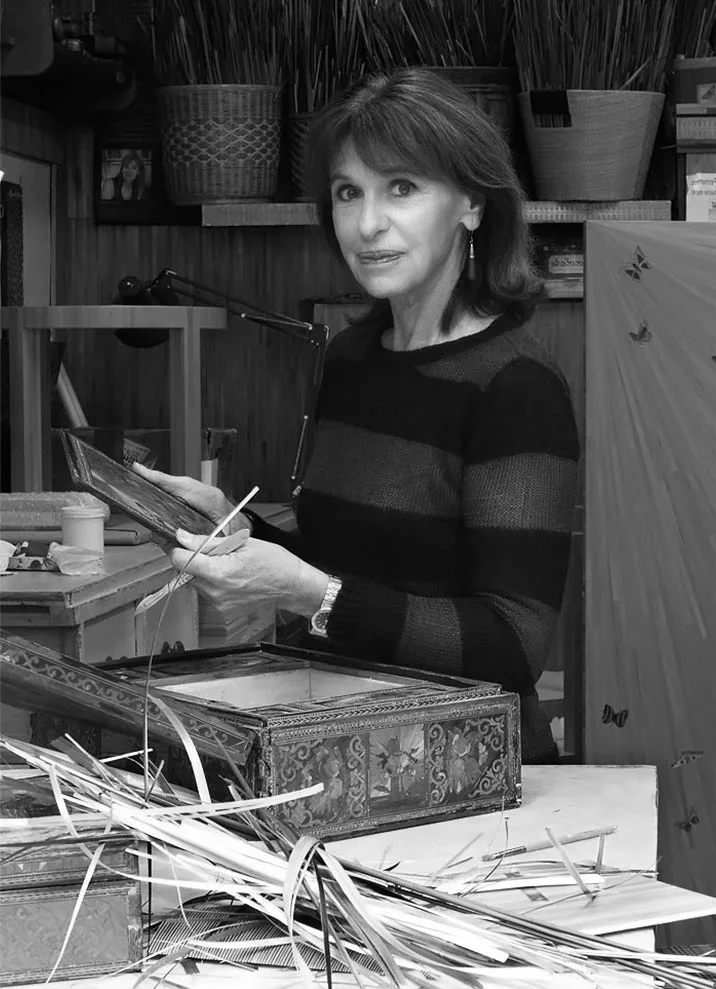
After graduating from the Union centrale des Arts décoratifs, Lison de Caunes focused on the art of straw marquetry, following in her grandfather’s footsteps — the renowned decorator André Groult.
An expert in this craft, she rejuvenated traditional practices by restoring vintage furniture and objects from the 17th century to the Art Deco era. Lison has held exhibitions, written books about straw marquetry, and participated in events to highlight this versatile material.
She designs custom furniture, home décor, and wall panels for interior architects and decorators. In 2015, she established Lison de Caunes Créations, her own brand of straw marquetry furniture.
Thanks to Lison’s dedication, straw marquetry has been rediscovered by the design world. Contemporary artists like the exceptionally talented Arthur Seigneur have since shown just how much can be achieved with this incredible medium.
Applications
While I primarily use straw marquetry to add a taste of genuine Parisian luxury to furniture items, the applications are remarkably diverse:
- Furniture panels and surfaces — tabletops, cabinet doors, drawer fronts
- Headboards — particularly striking on beds
- Wall panelling — beloved by luxury brands like Cartier, who feature it in stores worldwide
- Decorative objects — boxes, frames, and accessories
- Even watches — Cartier has incorporated straw marquetry into some timepiece designs
Durability
Despite its delicate appearance, straw marquetry is surprisingly tough and hardwearing. The straw is naturally impervious to water, and all that’s needed to keep it clean and gleaming is a wipe with a damp cloth.
It’s a luxurious material that’s built to last — perfectly suited for heirloom furniture.
Custom Straw Marquetry
Straw marquetry provides a unique, textured appearance and can be used to create intricate designs, adding a distinctive and elegant flourish to any room. The way it interacts with light makes it a dynamic element — furniture that changes throughout the day as the light shifts.
If you’re interested in incorporating straw marquetry into a custom furniture piece, I’d love to discuss the possibilities.